
Yacht deck caulking is one of the most recognisable features of a teak deck. The clean lines between each plank contribute to the overall appearance of the deck, while the caulking itself forms an essential part of the complete decking system.
However, assessing the quality of yacht deck caulking involves much more than checking whether the finished lines look straight and consistent. The preparation of the grooves, caulking depth and width, adhesion, cleanliness, working conditions and curing time can all influence the quality and longevity of the finished result.
At Kreative Decks, we consider each of these factors throughout the caulking and recaulking process. A high-quality finish begins long before the final seams are visible.
Preparing the Caulking Grooves
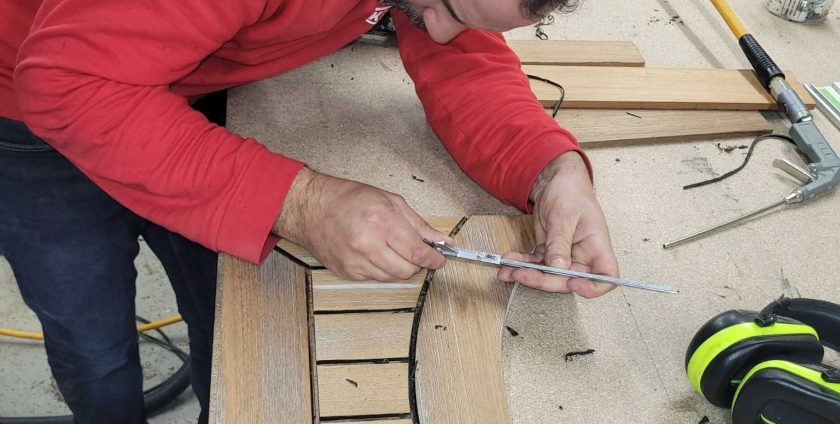
Good yacht deck caulking starts with careful preparation. When an existing deck is recaulked, the old material must first be removed so that the edges of the teak can be properly prepared for the new caulking compound.
This is particularly important because caulking products and formulations can change over time. Even when a similar product is being used, the material being applied today may differ from the caulking originally installed several years earlier. Cleaning the edges of the timber thoroughly therefore helps create the right surface for the new material to adhere to.
Depending on the project, groove preparation can involve mechanical methods alongside degreasing the timber before application. The use of a suitable primer can also help achieve reliable adhesion between the caulking and the teak.
The finished seam may be the visible part of the job, but its quality depends heavily on the preparation underneath.
Explore Kreative Decks’ professional yacht recaulking services
Why Caulking Depth and Width Matter
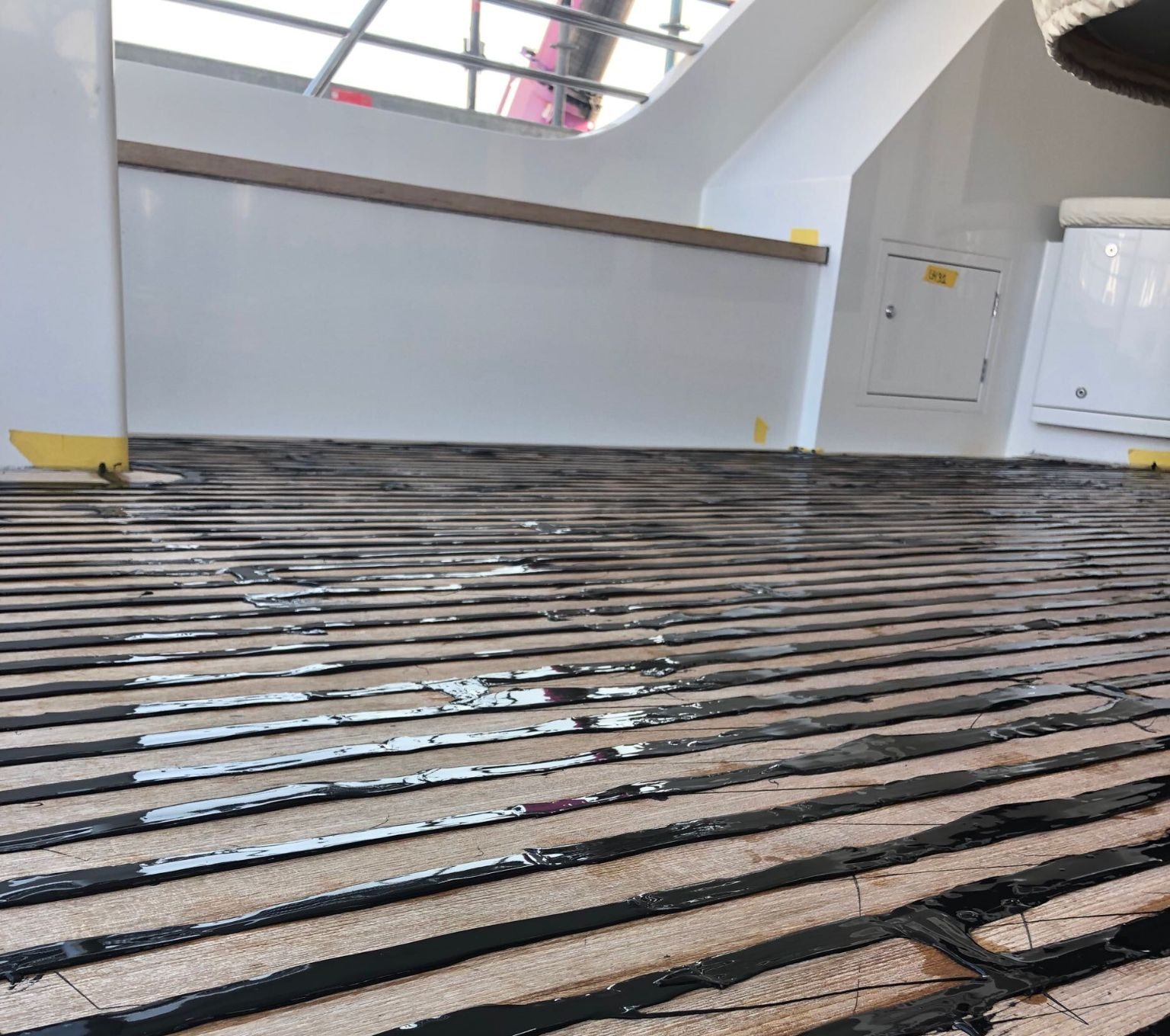
The dimensions of a caulking seam are another important part of assessing its quality. Finished caulking needs to be sufficiently deep, maintain the required width and provide a clean, consistent finish across the deck. These measurements are not simply aesthetic choices; they form part of how the caulking is specified and installed.
Depth becomes particularly important as a teak deck ages. For example, a deck may originally have been installed using teak approximately 20mm thick. Over years of wear, cleaning and sanding, this could eventually reduce to around 15mm. As the teak becomes thinner, the available caulking depth can also reduce. If only a very shallow amount of caulking remains, the seam may no longer be sufficient.
This means the caulking cannot always be considered separately from the condition of the surrounding deck. Remaining teak thickness and the available groove depth both need to be taken into account when assessing an older yacht deck.
Adhesion Between Caulking and Teak
Good adhesion is another key indicator of yacht deck caulking quality. The caulking needs to bond effectively to the edges of the teak. When that bond begins to deteriorate, the material can start separating from the sides of the planks. This detachment is one of the signs that existing caulking may require attention.
Preparation plays an important role here. Applying new material into a groove that has not been sufficiently cleaned or prepared can compromise the bond, even if the finished seam initially appears acceptable.
This is one of the reasons why yacht deck caulking should not be assessed on appearance alone. A clean surface finish is important, but the preparation and adhesion underneath ultimately contribute to how the seam performs over time.
Find out more about maintaining and protecting a yacht teak deck

Controlling Humidity During Yacht Deck Caulking
Environmental conditions are another important consideration when carrying out caulking work. Humidity can interfere with the products used during the recaulking process, which is why suitable protection is important. For professional deck work, the working area may need to be covered by a waterproof tent to provide greater control over the conditions in which the materials are prepared and applied.
Avoiding this stage to reduce project costs can introduce unnecessary risk. A well-controlled working environment helps protect the deck from changing weather conditions and provides more suitable conditions for the products being used.
Tenting can also form part of a wider deck replacement or refit process. Once an old deck has been lifted, the condition of the underlying surface can be assessed before preparation and installation continue.
See how the Kreative Decks yacht decking process works from start to finish
Allowing Yacht Deck Caulking to Cure Properly
Correct application is only part of the caulking process. The material also needs sufficient time to cure. This is particularly important before sanding and final finishing. Attempting to sand the deck too soon can interfere with caulking that appears ready at the surface but has not yet cured properly through its core.
For example, sanding after only four days can be too early for the chemical product to have cured completely. The immediate result may appear satisfactory, but damaging the material at this stage can contribute to problems later in the life of the deck. The appropriate curing period should therefore be factored into the wider project schedule rather than rushing the finishing process. A high-quality caulking job is not simply one that looks good when the work is completed. It should be carried out with long-term performance in mind.
What Should Finished Yacht Deck Caulking Look Like?
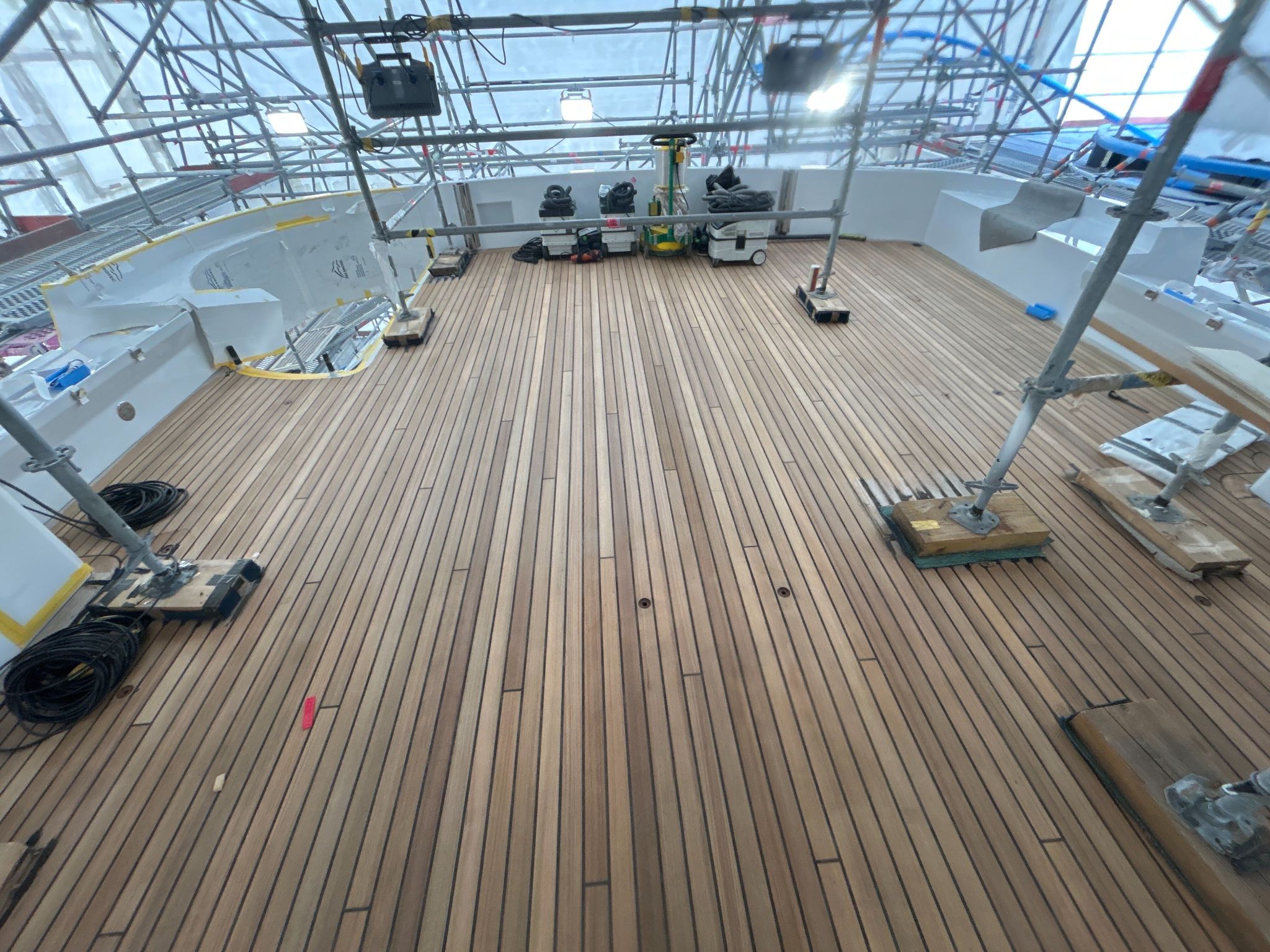
Once completed, yacht deck caulking should create clean and consistent seams throughout the deck. The caulking should follow the specified width, provide sufficient depth and sit cleanly alongside the surrounding teak. Irregular widths, poor finishing or separation from the edges of the timber can all affect the overall quality of the result.
However, the appearance of the finished deck only tells part of the story. A professionally executed caulking job combines careful groove preparation, suitable dimensions, good adhesion, controlled working conditions and sufficient curing time. Problems with any of these stages may not necessarily be obvious immediately after the work has been completed.
As a deck ages, the physical condition of the caulking can provide further indications of its condition. Caulking products can be affected by UV exposure over time, and material that has become unusually soft or sponge-like may indicate deterioration. Regular inspection can help identify these changes before isolated defects develop into more extensive problems.
Professional Yacht Deck Caulking
Quality yacht deck caulking is the result of a complete process rather than simply applying new material between teak planks. From cleaning and preparing the grooves to establishing the correct dimensions, controlling working conditions and allowing sufficient curing time, each stage contributes to the quality of the finished deck.
At Kreative Decks, our team combines specialist decking knowledge with experienced craftsmanship to deliver precise caulking and recaulking solutions for superyachts. Whether the work involves individual areas of deteriorating caulking, a complete recaulking programme or forms part of a wider teak deck refit, the condition of the existing deck is assessed before determining the right approach.