
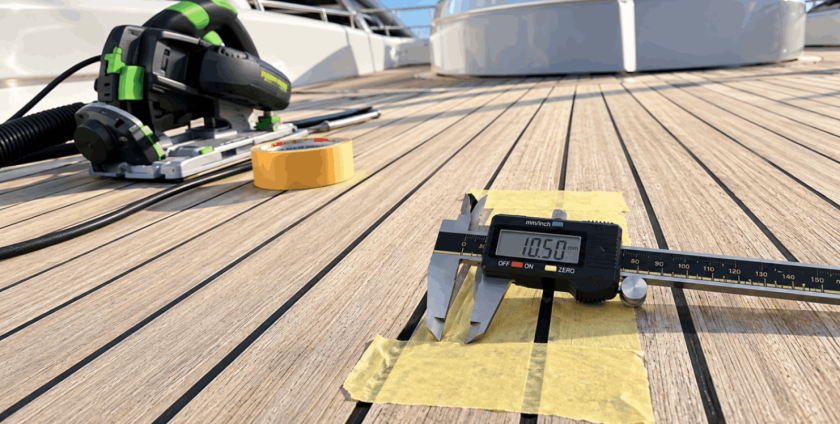
The condition of a yacht deck is not always obvious from its appearance. A teak deck may still look clean and well maintained while years of use, cleaning and sanding have gradually reduced the amount of usable timber remaining.
For this reason, teak deck thickness is an important consideration when assessing an existing deck. Understanding how much teak remains can help determine whether a deck can continue to be maintained and repaired or whether more extensive work may eventually be required.
At Kreative Decks, remaining thickness is considered alongside the wider condition of the deck to determine the most appropriate approach.
Why Teak Deck Thickness Matters
A teak deck is designed to provide years of service, but its planks will gradually become thinner through exposure to the weather, everyday wear and regular cleaning. As a general guide, teak decking can lose approximately 1mm of thickness per year, although the actual rate depends on its exposure, use and maintenance.
The important measurement is therefore not simply how thick the teak deck planks were when originally installed, but how much usable material remains today.
A deck that began with approximately 20mm of teak, for example, may have reduced to around 15mm over time. This reduction can also affect other elements of the deck. As the timber becomes thinner, the available depth of the caulking grooves can decrease, which may eventually affect the ability to recaulk the deck effectively.
This is why plank thickness forms an important part of assessing the overall condition and potential remaining life of an older yacht deck.
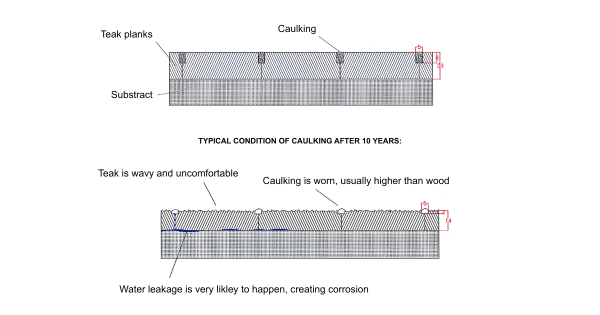 How Teak Decks Become Thinner Over Time
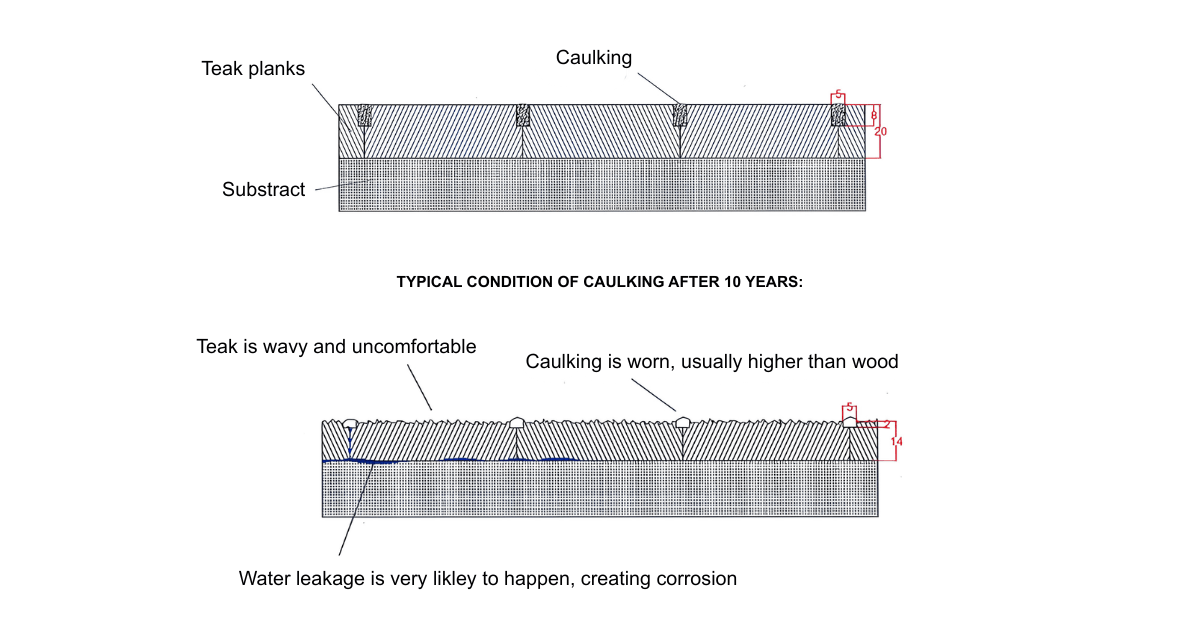
Some reduction in thickness is an inevitable consequence of a deck being used over many years. However, maintenance practices can also influence how quickly material is removed.
Teak is relatively soft and can be marked or worn when treated too aggressively. Frequent or abrasive cleaning can therefore contribute to unnecessary wear, while sanding physically removes material from the surface each time it is carried out.
A freshly sanded deck can look almost new, but its appearance does not show how much teak has been removed to achieve that finish. Over the lifetime of a deck, repeated sanding can gradually reduce the material available for future maintenance and repairs. Preserving the existing teak wherever possible can therefore help extend the usable life of the deck.
Find out more about yacht deck maintenance
Assessing the Remaining Thickness of Teak Deck Wood
When assessing an existing yacht deck, remaining teak thickness is one of the first factors to consider. However, thickness should not be viewed in isolation. A deck with sufficient material remaining may still be suitable for repair or continued maintenance, particularly if the teak remains securely bonded and there are no obvious signs of problems underneath.
Conversely, signs of corrosion, lifting sections of the deck or water appearing from beneath the teak can indicate that more substantial investigation or replacement may be necessary. This makes a professional assessment particularly useful. Rather than making a decision based solely on the visible surface, the remaining teak can be considered alongside the bonding and underlying deck structure.
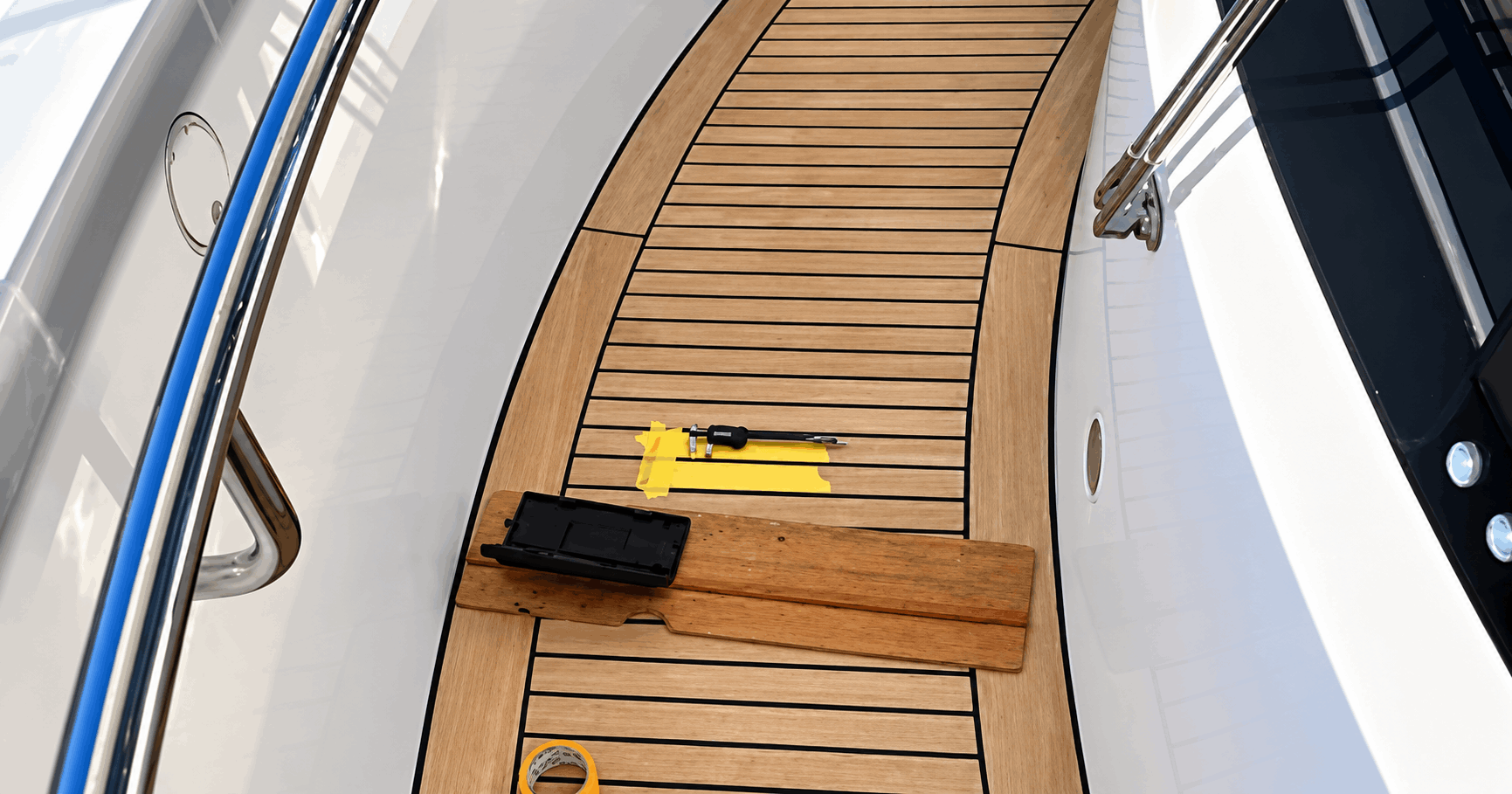
When Does a Teak Deck Become Too Thin?
There is no single thickness at which every teak deck automatically needs to be replaced. The condition of the complete deck needs to be considered, including how well the teak is bonded and whether there are signs of corrosion or other underlying problems.
As a practical guide, a deck with more than approximately 10–12 mm of teak remaining may still provide opportunities for recaulking or repair, provided the deck is well bonded and otherwise in suitable condition. This should not be treated as a universal replacement threshold. Every yacht deck is different, and factors such as its original construction, current condition and the work required all influence what can realistically be achieved.
It is also important to consider how much timber will remain after any proposed work. Timber that initially appears to offer around 15 mm of usable material, for example, may lose additional thickness during more extensive surface preparation or planning, potentially leaving less material than expected. Assessment therefore needs to consider both the thickness available today and the material likely to remain once the required work has been completed.
Thickness Is Not the Only Factor
Remaining thickness is only one consideration when deciding whether a yacht deck can be repaired. The condition of the caulking is particularly important, as thinner planks can also mean shallower caulking grooves.
If insufficient groove depth remains, recaulking may become more difficult even when the surface of the teak still appears in reasonable condition. The condition of the adhesion and underlying deck must also be considered when determining whether further repairs are practical.
Read more about how yacht deck caulking quality is assessed
Can an Older Teak Deck Still Be Repaired?
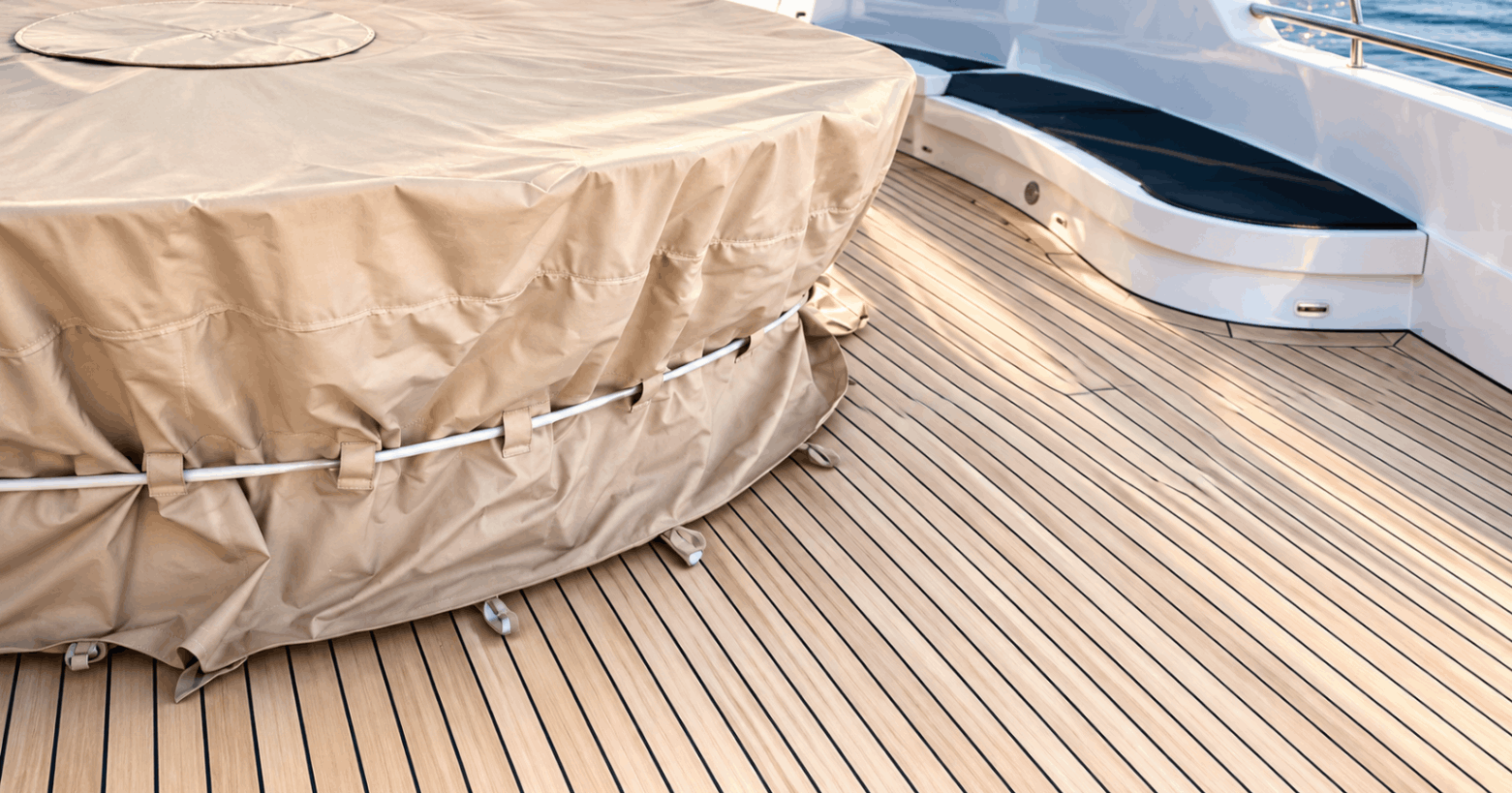
Age does not automatically mean that an entire yacht deck needs replacing. Where sufficient teak remains and the deck is still appropriately bonded, repairs and recaulking can sometimes extend its working life. This may include replacing individual planks, repairing specific areas or addressing sections of deteriorating caulking rather than removing an otherwise serviceable deck.
This reflects Kreative Decks’ wider approach to teak: retaining and repairing usable material wherever it is practical to do so rather than replacing timber unnecessarily. There can also be environmental benefits to extending the life of an existing deck. Removing a complete teak deck creates substantially more work and waste, while old timber contaminated with adhesives and caulking can be difficult to reuse.
Careful maintenance and timely repairs can therefore help preserve both the teak itself and the investment already made in the deck.
Explore Kreative Decks’ yacht teak decking services
Assessing an Existing Yacht Deck
Teak deck thickness can provide valuable information about how much usable material remains, but it is only one part of assessing a yacht deck. Remaining plank thickness, caulking depth, adhesion, underlying condition and the amount of material that will remain following any proposed work should all be considered together.
Kreative Decks offers professional teak deck assessment reports to help determine whether repair, recaulking, restoration or replacement is the most suitable option. Our priority is to preserve serviceable teak wherever practical, helping yacht owners and crew extend the life of their decking while avoiding unnecessary replacement.